The LIRIC Framework
Teaching children to read and write should be an artistic process.
The LIRIC Framework is a music-based, research-backed framework and practical tool which brings creativity and feeling back into the primary English classroom to support oral language and writing.
Why do we need music in the primary English classroom?
The Framework
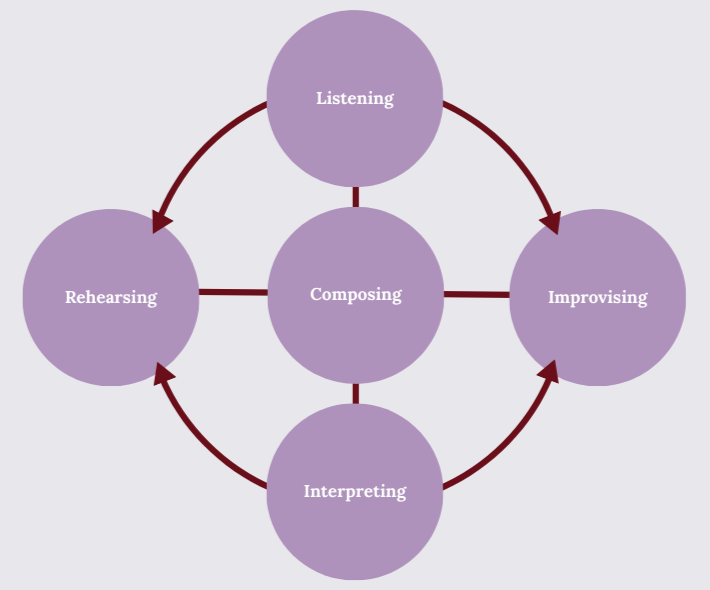
The LIRIC Framework sees creative work as requiring a focus on structural design elements to cohere the work but also cyclic iterations of focus and enjoyment
Listening
Interpreting
Rehearsing
Improvising
Composing
Rhythm and music in the English classroom:
Composition as interdisciplinary and metacognitive work
Movement, music, speech and sound are needed for writing
Linguistic grammar is underpinned by rhythm
Creative work requires both play and precision
Rhythm is a basic temporal principle for life not only in terms of music